Article
Cooking measurement conversions: cups, grams, ml, and oven temperatures
Converting cooking measurements is not as straightforward as multiplying by a fixed number. Density, unit systems, and oven conventions all vary by country and recipe tradition. This article explains what is actually happening when you convert between cups, grams, millilitres, tablespoons, and degrees.
Why cooking conversion is not just unit math
A unit converter can tell you that one US cup equals 236.6 ml. What it cannot tell you is how many grams that cup contains, because the answer depends entirely on what is in the cup. One cup of all-purpose flour weighs around 120–130 g when spooned and levelled, but a cup of granulated sugar weighs about 200 g, and a cup of honey weighs close to 340 g. The difference comes from density: how tightly the molecules pack into a given volume. Water is the reference point (1 ml = 1 g by definition), but almost every cooking ingredient deviates from that. This is why a recipe that says "200 g of flour" and one that says "1.5 cups of flour" can appear to measure the same thing, yet produce different results if you apply a generic ml-to-g factor. Volume-to-weight conversion is only accurate when you know the specific ingredient and its density.
Volume units across measurement systems
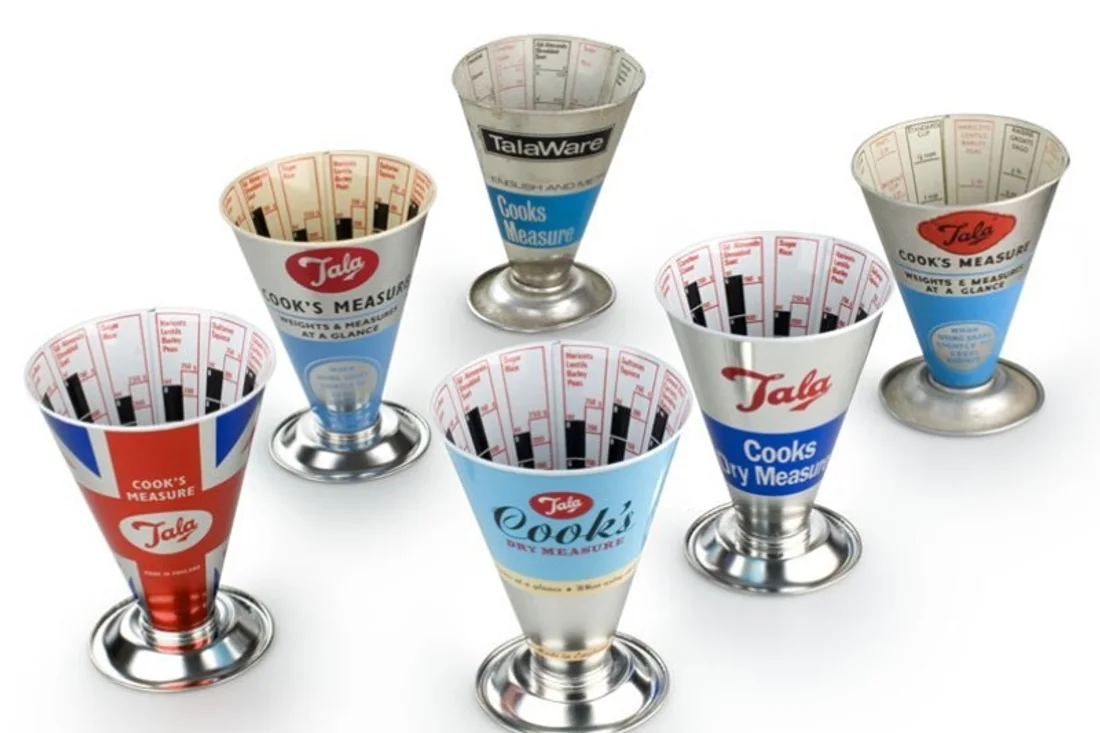
Three different "cups" exist in common recipe use, and they are not the same size. The US customary cup is 236.6 ml. The metric cup, used in Australia, Canada (for older recipes), and some other countries, is exactly 250 ml. The imperial cup, used in some older British and Commonwealth recipes, is about 284 ml. The gap between a US cup and a metric cup is small enough to ignore in casual cooking, but it matters in baking where ratios are precise. Tablespoons and teaspoons also differ: a US tablespoon is 14.8 ml, an Australian tablespoon is 20 ml, and a UK tablespoon is generally accepted as 15 ml. Teaspoons are more consistent (roughly 5 ml across systems), but not identical. Millilitres and litres are consistent worldwide, which is one reason metric recipes travel better across countries.
Weight versus volume: why bakers prefer grams
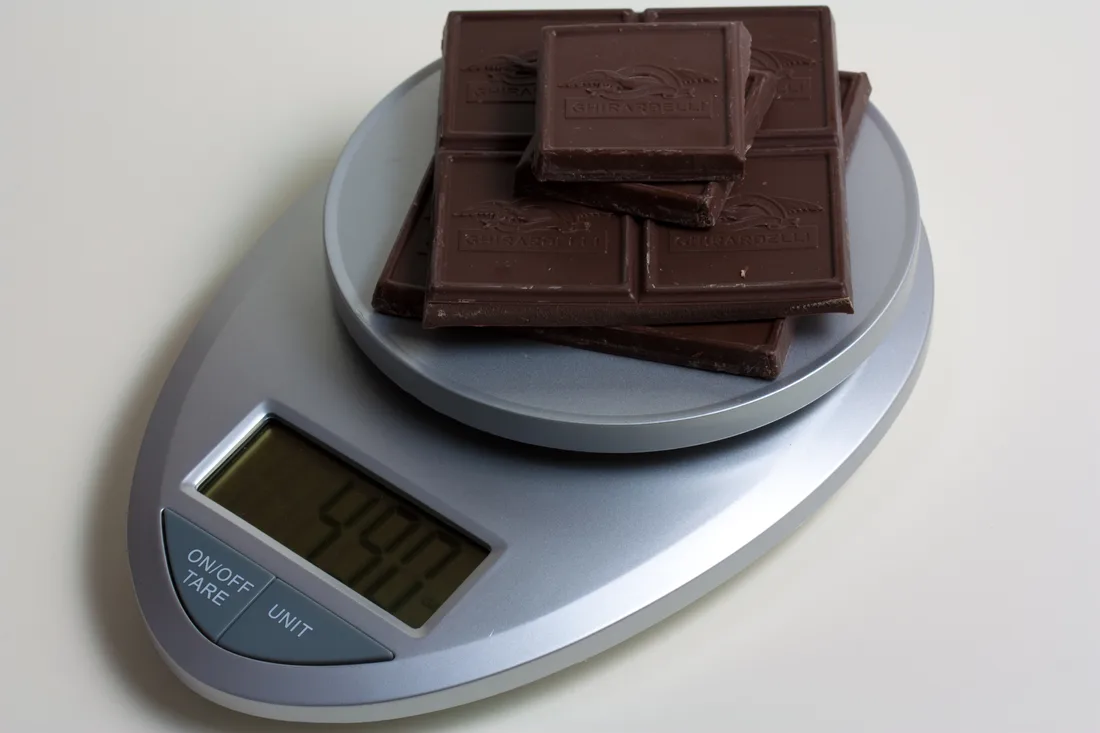
Professional bakers and many home bakers insist on weight measurements because weight is unambiguous: 200 g of flour is 200 g regardless of how you scooped it, how humid the day is, or how settled the bag became. Volume measurements carry uncertainty. If you scoop flour directly from the bag you can pack 20–30% more than if you spoon it gently into the cup. Butter is another example: a US recipe that says "half a cup of butter" relies on the reader knowing that butter is typically sold in sticks calibrated to cup fractions, a convention that does not transfer to metric countries. Weight is also easier to scale: doubling a recipe in grams is a single multiplication; doubling cup fractions can produce awkward fractions like "3 cups plus 2 tablespoons". For ingredients like chocolate chips, nuts, or grated cheese, the density variation is large enough that weight is the only reliable measure.
Oven temperatures: °F, °C, and gas marks
Oven temperature conventions follow the same national-system split as volume. American recipes use Fahrenheit; most European and Australian recipes use Celsius. The conversion formula is straightforward: °C = (°F minus 32) multiplied by 5/9. So 350 °F equals about 177 °C, a typical moderate baking temperature. UK recipes from older cookbooks also use gas marks, a numbered scale from 1 to 9 that corresponds to specific Celsius values: gas mark 4 is 180 °C, gas mark 6 is 200 °C. A practical complication is fan or convection ovens. Most modern ovens offer a fan-assisted mode, which circulates air and typically cooks 15–20 °C hotter than a conventional static oven at the same dial setting. A recipe that specifies 180 °C in a static oven should be run at about 160–165 °C in a fan oven, or watched carefully to avoid over-browning. Oven thermostats are also often inaccurate, so an oven thermometer is worth having.
Doing the conversion locally, without uploading anything
The cooking-converter tool on this site handles ingredient-aware volume-to-weight conversion. You choose the ingredient from a list and the tool looks up its density to give you a gram figure for a given cup or ml value. This matters precisely because of what section 1 explains: there is no single correct answer for "how many grams is one cup" without knowing the ingredient. The unit-converter tool covers the broader case: converting between metric, US customary, and imperial units for volume, weight, length, temperature, and other categories. Both tools run entirely in your browser. No file is sent to any server; the computations happen locally with data that is part of the page. This is true even for the temperature formulas and the density lookup tables. There is no account, no upload prompt, and nothing that leaves your device.
Tools in this article
- Cooking converterConvert cooking units, cups, grams, ml, oz, by ingredient, plus °F ↔ °C. No upload.
- Unit converterConvert length, mass, temperature, volume, area, speed, data and time units. No upload.
- Fraction CalculatorAdd, subtract, multiply or divide fractions instantly, results auto-reduced, decimal shown. 100% offline, no upload.
Frequently asked questions
Why does "1 cup" in grams differ between flour and sugar?
Because cups measure volume, not weight. The number of grams in a cup depends on the ingredient's density. Flour is relatively light and airy, so a cup holds around 120–130 g. Sugar is denser, so a cup holds about 200 g. Using a generic conversion factor without specifying the ingredient will give you the wrong result.
What is the difference between a US cup and an Australian cup?
A US cup is 236.6 ml and an Australian metric cup is exactly 250 ml. That is a difference of about 13.4 ml, or roughly 5.7%. For one cup of flour this adds up to about 8 g. In everyday cooking the difference is small, but in baking, especially for multiple cups, it can shift a recipe noticeably. Always check which cup system the recipe uses.
What is gas mark 4 in Celsius and Fahrenheit?
Gas mark 4 corresponds to 180 °C (356 °F), which is a standard moderate baking temperature for cakes and biscuits. Gas mark 6 is 200 °C (392 °F), suitable for roasting. If your oven is fan-assisted, reduce the Celsius figure by 15–20 degrees or follow the manufacturer's guidance.